
Hawaii’s internet situation is very different from most U.S. states. Geography and isolation play a major role in how internet service is built and delivered across the islands.
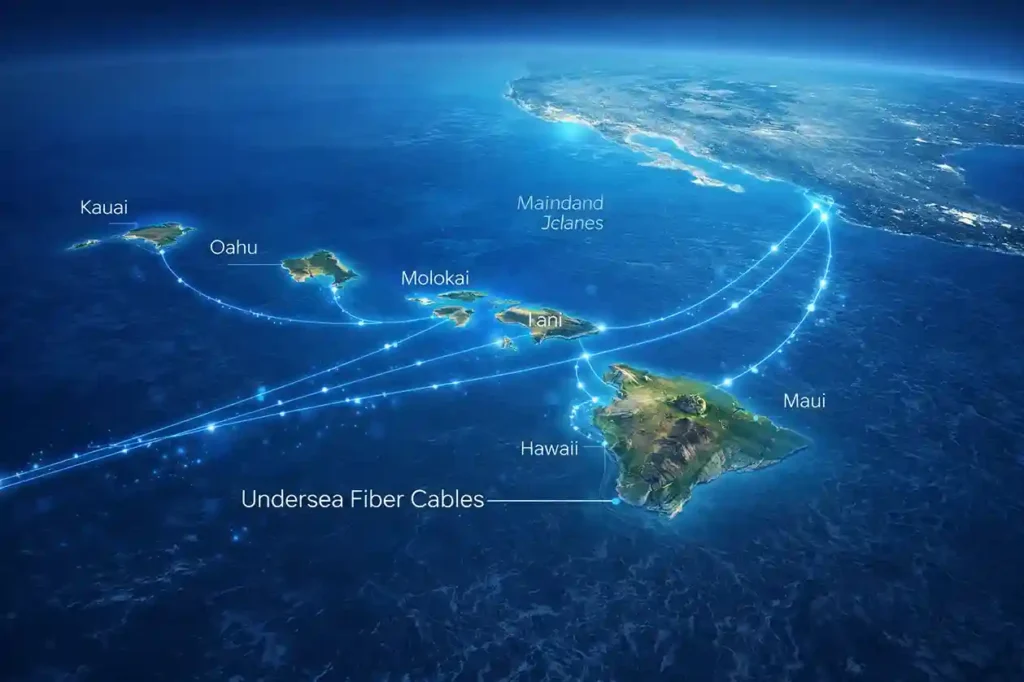
Hawaii is made up of separate islands, which makes building and maintaining internet infrastructure more complex than on the mainland. All major internet traffic reaches the state through undersea fiber-optic cables, which are costly to install and slow to repair.
For residents, these challenges often mean fewer internet providers to choose from and higher prices than on the mainland. High-speed options are mostly available in and around Honolulu, while many rural and outer-island areas must rely on wireless or satellite services.
Internet delivered through fiber-optic cables
Best for: Remote workers, families, gamers, businesses
Internet delivered through cable TV lines
Best for: Streaming, families, everyday use
Internet delivered over phone lines
Best for: Basic browsing only
Internet delivered from nearby cellular towers
Best for: Renters, rural areas, quick installation
Internet delivered from satellites in space
Best for: Remote or rural homes
Choosing the right speed helps you avoid overpaying or ending up with slow, unreliable internet. Your ideal speed depends on how many people use the internet and what you use it for.
$50/mo
300 Mbps
Families, streaming, everyday home use
Oahu, Maui, Kauai, Big Island towns
$55/mo
Up to multigig
Remote work, students, gamers
Select neighborhoods statewide
$40/mo
Low speeds
Basic internet use
Rural areas
$50/mo
~100–300 Mbps
Renters, flexible households
Urban/subur ban where 5G signal strong
$50/mo
Varies by location
Homes with strong Verizon 5G
Limited areas
$120/mo
~50–200 Mbps
Rural homes, outer islands
All islands (rural + remote)
$70/mo
Moderate (satellite)
Where no other option
All islands
$50/mo
Moderate (satellite)
Remote/backup internet
All islands
$50/mo
Varies by location
Rural Oahu homes
Rural Oahu pockets
$50/mo
Basic– moderate
Rural households
Select rural areas
$50/mo
Varies widely
Very remote communities
Specific rural neighbourhood
Service areas: Oahu, Maui, Kauai, and populated areas of the Big Island
Internet type: Cable
Speeds: Around 300 Mbps to 1 Gbps, depending on plan and location
Pricing: Approximately $50–$85/month (price usually increases after the first year)
Best use cases: Families, streaming, online classes, general home use where fiber is not available
Service areas: All major islands; fiber limited to select neighborhoods
Internet type: Fiber (where available), DSL elsewhere
Speeds:
Pricing:
Best use cases: Remote workers, students, gamers, and small businesses
Service areas: Many urban and suburban areas with strongT-Mobile coverage
Internet type: 5G fixed wireless
Speeds: Typically 100–300 Mbps, varies by signal and congestion
Pricing: Approximately $35–$60+/month (often $40–$50/month for T-Mobile mobile customers)
Best use cases: Renters, flexible households, areas with limited wired options
Service areas: Limited locations; availability varies by exact address
Internet type: 5G fixed wireless
Speeds: Varies widely depending on coverage and network conditions
Pricing: Approximately $50–$70/month (discounts often available for Verizon mobile customers)
Best use cases: Homes with strong Verizon 5G signal and few wired alternatives
Service areas: Statewide, including rural and remote areas
Internet type: Low Earth Orbit satellite
Speeds: Around 50–200 Mbps with lower latency than traditional satellite
Pricing:
Best use cases: Rural homes, farms, off-grid locations, outer islands
Service areas: All Hawaiian islands
Internet type: Traditional satellite
Speeds: Lower than Starlink; can slow during peak usage
Pricing: Approximately $70–$150/month, depending on plan and data allowance
Best use cases: Last-resort option where no other internet service is available
Service areas: Statewide coverage
Internet type: Traditional satellite
Speeds: Similar to Viasat, noticeable delay for real-time activities
Pricing: Approximately $50–$100/month
Best use cases: Backup or emergency internet in extremely remote areas
Service areas: Select rural and underserved areas of Oahu
Internet type: Fixed wireless
Speeds: Vary by location and line of sight; generally suitable for basic to moderate use
Pricing: Approximately $50–$90/month, depending on plan and location
Best use cases: Rural homes on Oahu without access to cable or fiber
Service areas: Select rural locations in Hawaii (coverage varies by island)
Internet type: Fixed wireless
Speeds: Basic to moderate speeds, depending on signal and location
Pricing: Approximately $50–$80/month
Best use cases: Rural homes on Oahu without access to cable or fiber
Service areas: Very specific neighborhoods or rural communities across different islands
Internet type: Fixed wireless
Speeds: Vary widely depending on provider and infrastructure
Pricing: Typically $50–$100/month
Best use cases: Remote or outer-island areas with no national provider coverage
Best options: Fiber (Hawaiian Telcom), Cable (Spectrum)

Best options: Cable, Fiber, 5G Home Internet

Best options: Fiber first, Cable second

Best: 5G home internet (no contracts)

Best options: Starlink, Local Fixed Wireless Providers
Customer service and reliability matter in Hawaii because provider choices are often limited. Internet performance and support quality can vary by island and neighborhood, so it’s important to read local reviews and user experiences before choosing a provider. In rural areas, local providers may offer more personal support, while larger providers usually have wider coverage but slower response times.
Advertised speeds show the maximum possible speed, not everyday performance. Real speeds in Hawaii can vary by time of day, connection type, and network congestion, especially with wireless and satellite internet.
The listed monthly price may not include all costs. Extra charges can include equipment rental, installation fees, and early termination penalties, and many plans increase in price after promotional periods.
Common providers: Spectrum, Hawaiian Telcom (Fiber & DSL), T-Mobile 5G, Verizon 5G Local providers: Xiber Hawaii
Common providers: Spectrum, Hawaiian Telcom (limited fiber), T-Mobile 5G Satellite options: Starlink, Viasat, HughesNet
Common providers: Spectrum (towns), Hawaiian Telcom (mostly DSL) Satellite options: Starlink widely used
Common providers: Spectrum, Hawaiian Telcom (mostly DSL) Satellite options: Starlink, Viasat, HughesNet
Common options: Local wireless ISPs Satellite options: Starlink, Viasat, HughesNet
Common options: Limited DSL or wireless Satellite options: Starlink, Viasat, HughesNet
The Affordable Connectivity Program (ACP) is a federal program that helps eligible households lower their monthly internet costs. It is designed to make internet access more affordable for families, students, seniors, and residents with limited income.
Texas is a very large state with a mix of dense cities, suburbs, small towns, and rural areas. Internet infrastructure is heavily built around population density, so major cities often have fiber and cable options, while rural areas may only have DSL, fixed wireless, or satellite. Even within the same city, availability can change street by street depending on existing network lines.
Yes, fiber internet is available in Hawaii, but only in select neighborhoods. Hawaiian Telcom is the main fiber provider, and coverage is strongest on Oahu, with limited expansion on other islands. Even within fiber-served cities, availability can vary street by street. Many homes still rely on cable, DSL, or wireless internet. Always check fiber availability using your exact address, not just your city or ZIP code.
Internet speeds vary because infrastructure is not evenly distributed across Hawaii. Urban areas usually have newer networks and more provider investment, while rural and outerisland areas often rely on older or wireless technology. Terrain also plays a role. Mountains, valleys, and distance from network equipment can reduce speed and reliability. Even homes close together may experience different performance depending on wiring, signal strength, or line-of-sight.
No. Advertised speeds represent the maximum possible speed under ideal conditions. They are not guaranteed at all times. Real-world speeds depend on factors such as network congestion, time of day, type of internet connection, Wi-Fi quality inside your home, and even weather for wireless or satellite services. Running speed tests at different times can give a more accurate picture of actual performance.
Satellite internet is reliable in terms of availability, especially in remote areas, but performance varies by provider. Traditional satellite services like Viasat and HughesNet have higher latency, which can affect video calls, gaming, and real-time applications. Starlink generally offers better performance because it uses low-Earth-orbit satellites, resulting in lower delay and faster speeds. However, satellite service can still be affected by heavy rain, storms, or obstructions like trees and buildings.
Some internet plans do have data caps, while others do not. Traditional satellite providers almost always enforce data limits, which can result in slower speeds after the cap is reached. Most fiber, cable, and 5G home internet plans in Hawaii do not have data caps, making them better options for households that stream video, attend online classes, or work from home. Always confirm data limits before signing up.
Sometimes you can. Calling your provider’s customer retention department and asking about discounts, promotions, or loyalty pricing may help. You can also ask whether you qualify for ACP discounts or any local assistance programs. Negotiation success depends on competition in your area. In places with fewer providers, flexibility may be limited.
Bundling can sometimes reduce the total monthly cost, but it’s not always the best deal. Many bundles include services you may not need, which can increase long-term costs once promotions end. Compare bundled pricing carefully and consider standalone internet plans if they better match your usage and budget.
Choosing internet in Hawaii depends heavily on your location, not just the provider name or advertised speed. Availability, pricing, and performance can vary widely by island and even by street. By checking availability at your exact address, understanding data caps and contracts, and comparing real-world performance, you can avoid surprises and choose a plan that fits your needs.