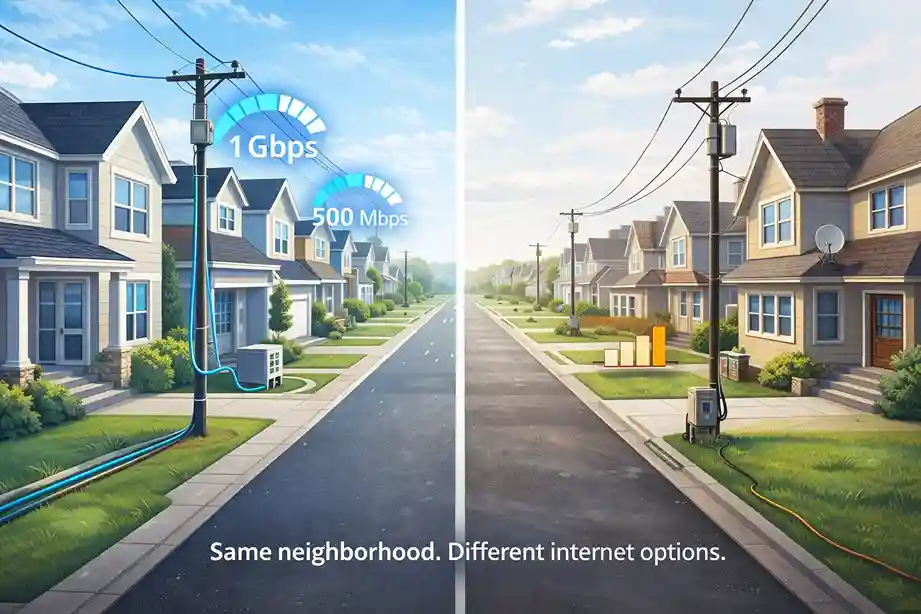
DFW is not one single city—it’s a large region with many cities and suburbs. Providers expand networks in phases, so coverage can feel uneven. One area may have fast fiber, while a nearby area may only have cable or wireless options. In general, DFW residents have access to all major internet connection types like Fiber (best for speed and low latency), Cable (widely available and strong for everyday use), Wireless / 5G home internet (easy setup and flexible, but performance can vary) Because availability can change street by street, using your exact address is the fastest way to see your real options.
Internet delivered through fiber-optic cables
Best for: Remote work, gaming, heavy streaming
Internet delivered from nearby cellular towers
Best for: Renters, apartments, short-term use
Internet delivered through cable TV lines
Best for: Streaming, everyday use
Even though Dallas and Fort Worth are part of the same metro area, internet coverage can feel different depending on the provider.
Dallas often has more neighborhoods with fiber availability, especially in areas with dense housing and newer developments. Residents may have more chances to compare fiber providers depending on the exact address.
Fort Worth has strong coverage too, but fiber availability can vary more by neighborhood and nearby suburbs. Some areas have fiber options, while others rely mainly on cable and wireless. The key takeaway: Don’t assume the same provider options across DFW. Always check your exact address.
$55/mo
~300 Mbps
No
Promo pricing may end
$45/mo
~500 Mbps
No
Availability varies
$50/mo
~100 Mbps
No
Promo pricing may end
$40/mo
~300 Mbps
No
Limited availability
$50/mo
~100 Mbps
No
No long-term contract
$55/mo
~100 Mbps*
Varies
Depends on partner network
Availability: Many DFW neighborhoods (varies by address)
Lowest Price Plan: ~$55/month
Typical Speed (lowest tier): ~300 Mbps
Best for: Remote workers, families, heavy internet users
Availability: Select areas across DFW
Lowest Price Plan: ~$45/month
Typical Speed (lowest tier): ~500 Mbps
DSL: Low speeds
Best for: Fiber-served neighborhoods, households needing stable speeds
Availability: Widely available across DFW
Lowest Price Plan: ~$50/month
Typical Speed (lowest tier): ~100 Mbps
Best for: Homes without fiber access
Availability: Select DFW markets
Lowest Price Plan: ~$40/month
Typical Speed (lowest tier): ~300 Mbps
Best for: Value-focused households in supported areas
Availability: Many urban and suburban areas
Lowest Price Plan: ~$50/month
Typical Speed (lowest tier): ~100 Mbps
Best for: Apartments, renters, flexible households
Availability: Depends on underlying partner network at your address
Lowest Price Plan: ~$55/month
Typical Speed (lowest tier): ~100 Mbps (varies by location and network type)
Best for: Suburbs or areas where EarthLink has strong partner coverage
In many parts of DFW, the fiber decision comes down to AT&T Fiber vs Frontier Fiber (when both are available).
AT&T Fiber is known for reliable speeds and strong upload performance, which is helpful for remote work and video calls. Availability is strong across many DFW areas, but pricing may increase after promotional periods.
Frontier Fiber is expanding and can be very competitive in fiber-served areas. It often appeals to households that want strong fiber performance and good value. However, availability is not consistent across all cities and suburbs.

Fiber (AT&T Fiber or Frontier Fiber) is usually the best choice for low latency and stable uploads.

Fiber first, cable second. Cable works well when fiber isn’t available.

T-Mobile 5G can be a good option for flexibility, but fiber is best if the building supports it.

Spectrum cable or EarthLink (depending on network) may be the most realistic choices.
In DFW, suburbs can have very different internet infrastructure depending on how old the neighborhood is and which provider expanded there first. Newer developments are more likely to be fiber-ready, while older areas may rely on cable or legacy networks.
Also, apartment buildings can be “locked” to one provider based on building wiring. This is why two people in the same suburb can have totally different provider choices.
Always check internet options using your full address (and unit number, if applicable).
Customer service can vary by provider and area, especially in large metro regions like DFW. Fiber connections usually provide the most consistent performance, while wireless speeds may fluctuate during peak hours. Before signing up, reading local reviews can help you understand how reliable a provider is in your specific neighborhood.
Many internet plans start with promotional pricing that increases after the first year. Additional charges can include installation fees, equipment rental, and early termination fees on certain plans. Always confirm the regular monthly price and any extra charges before you sign up—especially if you plan to move within the DFW area.
No. Fiber availability is strong in many areas but still varies by neighborhood and suburb. Some addresses have multiple fiber choices, while others only have cable or wireless options.
Both can be excellent. AT&T often has wider coverage, while Frontier may offer very competitive speeds in fiber-served areas. The best choice depends on availability and current pricing at your address.
Providers expand networks in phases, and each city has different neighborhoods, building ages, and infrastructure. That’s why coverage can look different even across the same metro area.
It can be reliable in areas with strong signal coverage, especially for everyday use. However, speeds can fluctuate during busy hours, so fiber or cable is usually more consistent.
Many apartment buildings are wired for a specific provider, which limits your choices. Always check availability using your full unit number before signing up.
Most fiber and many cable plans do not have data caps, but policies can vary. Always confirm before choosing a plan if you stream heavily.
DFW networks expand regularly. Recheck every 6–12 months, especially if you notice better options becoming available nearby.
DFW has strong internet options, but availability varies widely across Dallas, Fort Worth, and surrounding suburbs. If fiber is available at your address, it is usually the best option for speed and low latency. If fiber is not available, cable or 5G home internet may still work well depending on your neighborhood.